


Platform Overview
What OpenProtein.AI is, how to access it, and how the platform works to help you perform lab-in-the-loop protein design.
What is OpenProtein.AI?
OpenProtein.AI is a platform for flexible, end-to-end computational protein engineering, from structure prediction to de novo design to optimization. The platform hosts a curated set of AI models for various protein tasks, including our flagship foundation model – PoET-2 – and other state-of-the-art open-source models. The models can be used as one-off tools for single tasks, such as structure prediction or substitution analysis, or combined into powerful workflows for iterative protein optimization and design. Our workflows are built to optimize data efficiency and enable direct function-based protein engineering, from high- or low-throughput assays. To see worked-through examples of common workflows, see our tutorials page.
Using the platform
The platform can be accessed via web app, python client and REST API. The web app provides a complete, easy-to-use, no-code App for executing computational engineering tasks, includes built-in tools for analysis and visualization of results, and enables management of datasets, projects and jobs. All the workflows on our examples page can be performed entirely on the web app. For power users who want greater customization, or developers who want to build their own apps on top of our tools, we also surface a python client and REST API for programmatic access.
Because many protein design workflows involve large batch processing and long running sequence generation and filtering pipelines, our platform is built around asynchronous jobs that run in the background and can be revisited later. Most typical analyses take only a few minutes, but some can take up to a few hours to run. Grab a coffee or lunch and pick back up later.
Generate, Predict, and Select
Novel Variants
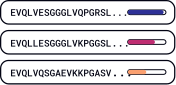
Generate
Design new sequences de novo or by mutating a starting one
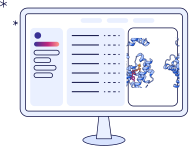
Predict
Model structure, function and fitness
Select
Prioritize promising variants
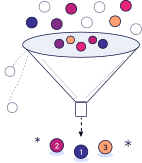
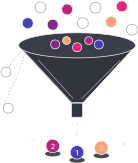
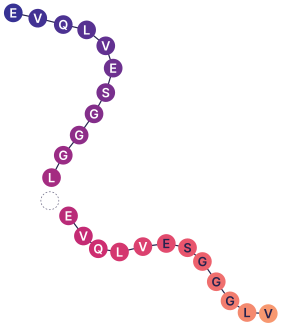
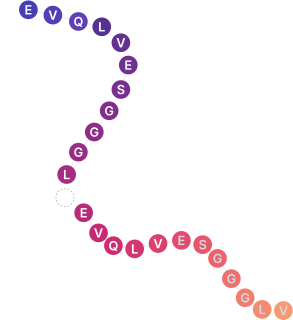
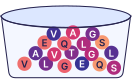
OpenProtein.AI's AI-driven protein engineering tools help you design protein variant libraries for testing. The core workflow for library design can be summarized as three in-silico steps: Generate, Predict, and Select. In Generate, new candidate protein sequences are generated, either by leveraging our in-house protein foundation language model, PoET-2, to suggest mutations to a starting sequence, or by using structure-based de-novo design methods like RFdiffusion and ProteinMPNN. At the Predict step, these candidate sequences are evaluated for structure, function, and fitness. We offer a range of prediction tools, including zero-shot fitness scoring with PoET, data-efficient custom property predictors that you can train on your assay data (more on that below), confidence metrics from co-folding models and more. Finally, at the Select step, the metrics from the Predict step, and additional analysis, visualization, and active learning tools on the platform, help you narrow down your sequences into a more tractable library for testing.
Design with your lab-in-the-loop: Train custom models on your data


Design
Novel Variants
Generate
Design new sequences de novo or by mutating a starting one
Predict
Model structure, function and fitness
Select
Prioritize promising variants
Learn
Train
Learn from every round of lab results






Foundation models
A shared base that powers generation, prediction, selection and learning
Build – Test
Screen
Build and measure in the laboratory

Your Data
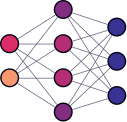
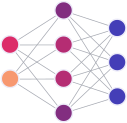
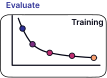
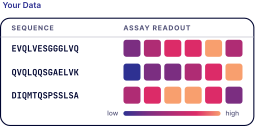
Key to the OpenProtein.AI approach to protein engineering is the integration of our foundation models with your wet-lab data generation processes. We know there is no substitute for real-world experimental data, and our platform helps you get the most out of every datapoint by enabling you to train custom models on your data. Given a small dataset of protein sequences and one or many associated experimental datapoints, our platform first embeds your sequences with our foundation models to produce embeddings - dense, feature-rich, machine-learned vector representations of your sequence. Then, the platform lets you train custom models on these representations to learn the relationship between your sequences and your experimental endpoints. Our platform uses a class of models called gaussian processes, which are robust, powerful models that are also Bayesian, meaning they output not only predictions but also confidence intervals.
This approach works well for many reasons. First, by training on top of protein foundation model embeddings, you take advantage of the deep understanding of protein sequence and evolutionary fitness that these foundation models have learned while training across millions of protein sequences. These representations are feature-rich and general. This saves the gaussian process model from needing to learn to represent the protein sequences, and instead it can be more lightweight, with fewer trainable parameters, which helps to prevent overfitting on small datasets.
Additionally, the confidence intervals help keep your predictions calibrated and realistic - as you explore further from the sequences that you have data on, the model's uncertainty will increase accordingly. Furthermore, confidence intervals enable active learning, where sequences can be selected not only to optimize for chance of success, but also to optimize the amount of new information the model would gain from knowing the experimental endpoint value for the sequence, thus improving the model's ability to predict on subsequent rounds. Our Select step offers tools for performing this active learning for library design.
A complete platform for design and optimization
Design settings


Your parental sequence


Design
Novel Variants
Generate
Design new sequences de novo or by mutating a starting one
Predict
Model structure, function and fitness
Select
Prioritize promising variants
Learn
Train
Learn from every round of lab results
Foundation models
A shared base that powers generation, prediction, selection and learning
Build – Test
Screen
Build and measure in the laboratory
Your Data
Output
Optimized variants
Experimentally validated and optimized for whichever properties you choose

 Activity

 Developability

 Thermostability

 Binding affinity

 Expression

 Specificity

 Solubility

 … and more
OpenProtein.AI offers a complete solution for computational protein design and optimization. You can get started with an assay dataset, a single sequence, or simply a structural design constraint or drug target. If you are starting with an assay dataset, you can train a custom model, and apply it to design a library for your next round of testing. If you have just a single sequence, you can use PoET-2's substitution analysis tool to predict the evolutionary fitness of mutations, and design an initial variant library for testing. And if you have only a drug target or some structural design constraint, you can use our de novo design tools to design de novo minibinders or antibodies.